Friday, February 27, 2015
Monday, February 16, 2015
Saturday, January 17, 2015
Cory Arcangel
Cory Arcangel is a contemporary artist who has done work in many different areas, from restoring Andy Warhol's long-lost digital art, to creating a program that lets you order Domino's Pizza from DOS. One of his most well-known pieces is Super Mario Clouds, a modified Super Mario Bros. cartridge with everything but the sky and clouds erased.
Now, you may dismiss this stuff as silly, and at the very least, it is a little tongue-in-cheek, but it's deeply connected to modern digital culture and how art can be used to represent that culture. Super Mario Clouds has been featured at 8 different exhibitions.
Another of his cartridge hacks, I Shot Andy Warhol, is a modification of the light-gun shooter Hogan's Alley, except instead of shooting criminals and sparing innocents, you shoot Andy Warhol and spare the Pope, Flavor Flav, and Colonel Sanders.
He has also created self-playing input systems for various games, mostly designed to make them lose, and a collection called Lakes, which features various photographs being reflected on what appears to be a body of water. He's also put out books, music, and many other pieces of art, code, and cartridge hacks, and has open-sourced much of his code and cart hacks for free public use.
Thursday, November 6, 2014
Monday, November 3, 2014
Art Dump
Wednesday, October 1, 2014
Traditional vs. Contemporary Art: Part 2
Fun fact: Wikipedia has no page dedicated to traditional art, and instead redirects to folk art, According to them, Folk Art is "art produced from an indigenous culture or by peasants or other laboring tradespeople.". Essentially, art created by everyday people, usually based on their culture or other beliefs, or as a way to convey a message about their lifestyle or culture. The explanation goes on to say: "As a phenomenon that can chronicle a move towards civilization yet rapidly diminish with modernity, industrialization, or outside influence, the nature of folk art is specific to its particular culture. The varied geographical and temporal prevalence and diversity of folk art make it difficult to describe as a whole, though some patterns have been demonstrated.". Basically, it's a means of keeping a record of a culture or civilization until they have a better or more efficient means of doing so. That's not to say it completely dies out when this happens. People will continue to make Traditional Art because it's just that, traditional.
There are some overlaps between traditional art and other forms of art, since traditional art is essentially the basis of all other art. There are also multiple terms used interchangeably with folk art, such as: "naïve art, tribal art, primitive art, popular art, outsider art, traditional art, tramp art, self-taught art, and working-class art/blue-collar art. As one might expect, these terms can have multiple and even controversial connotations but are often used interchangeably with the term "folk art".".
Here are a few examples of traditional art:
Lastly, it's also worth noting that all Folk/Traditional art was or is contemporary art.
There are some overlaps between traditional art and other forms of art, since traditional art is essentially the basis of all other art. There are also multiple terms used interchangeably with folk art, such as: "naïve art, tribal art, primitive art, popular art, outsider art, traditional art, tramp art, self-taught art, and working-class art/blue-collar art. As one might expect, these terms can have multiple and even controversial connotations but are often used interchangeably with the term "folk art".".
Here are a few examples of traditional art:
| Norwegian Folk Art, This particular piece is a calendar stick from the 17th century. |
| Gran Calavera Electrica, a Mexican Traditional piece from the early 20th century. |
Lastly, it's also worth noting that all Folk/Traditional art was or is contemporary art.
Tuesday, September 16, 2014
Contemporary vs. Traditional art, part 1.
What is contemporary art? Contemporary art is (according to my good friend Wikipedia) art produced in the present day currently by artists most active from 1970 onward. It doesn't have to have a cultural significance to it, it just has to be art, and convey some type of message, from the simple to the complex. One of the first things that came to mind when I thought of contemporary art was tabletop games, since art is often used to convey some sort of message to the player, typically for gameplay and/or flavour (thematic) purposes.
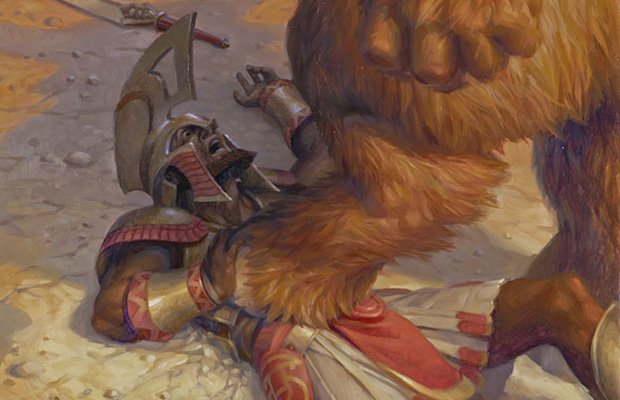
Take for example, the Magic: The Gathering card Hero's Downfall.
Here's the art:
Take for example, the Magic: The Gathering card Hero's Downfall.
Here's the art:
And here is what it does:
What better way to show something being mercilessly destroyed than by having it crushed underfoot?
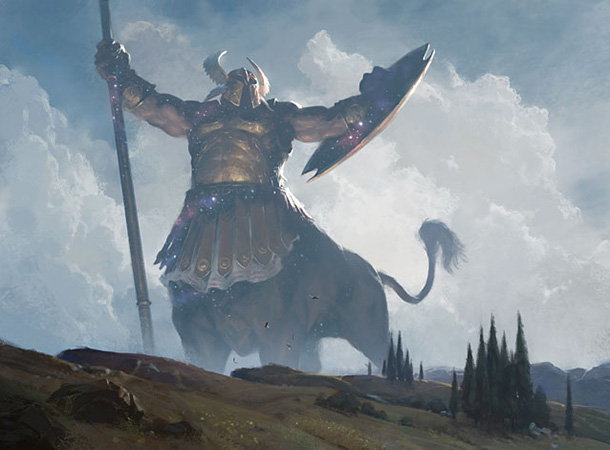
Here's another cool one, Iroas, The God of Victory:
And here's what he does:
It doesn't take a Magic expert to realize that he, well, kinda grants victory to things, making them hard to block and harder to kill, and when your army is big enough, he joins in on the fight. Also, just look at him. Doesn't he look like he's just ready to win? Another great example of art conveying a message,
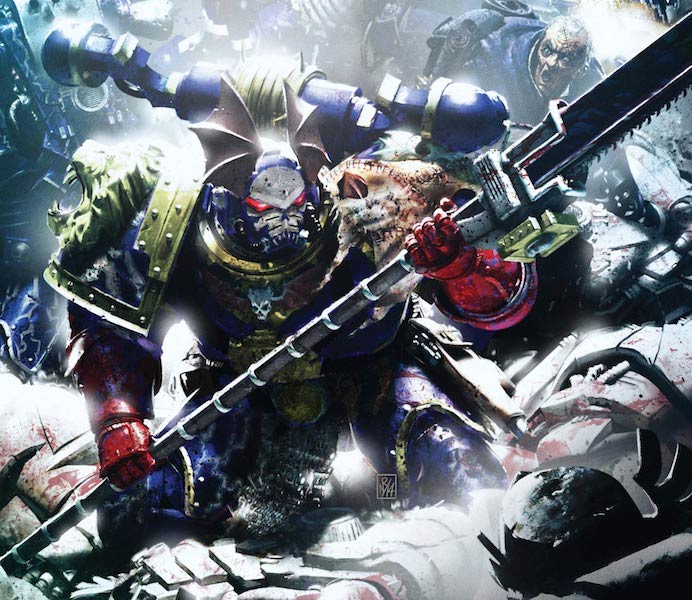
Magic is just one example of how art is used to convey both thematic elements and gameplay elements to the player. It's also great for showing various settings, such as the war torn worlds of Warhammer 40,000:
| The Tyranids are a hivemind race of voracious alien monsters. |
In addition to the art used both promotionally and thematically in Warhammer 40k, there are also the well detailed plastic and (once upon a time) die-cast models used to play the game, which people also often collect, build, paint, modify and sometimes even create for their own custom Warhammer experiences:
![]() |
| The Space Marines are the mascots of Warhammer 40k, and represent the human race. |
![]() |
| The technologically advanced Tau Empire are a generally peaceful race, assuming you don't stand between them and their "Greater Good". |
| The Eldar are an advanced and ancient, but dying race. They have powerful psionic abilities, and are similar to traditional fantasy elves in appearance. |
And of course, who can forget the granddaddy of tabletop games, good old Dungeons and Dragons:
![]() |
| Doesn't this just make you want to explore the world of the Forgotten Realms? |
| Not only does this demon look menacing, but he's an integral part of visualizing the gameplay. Make sure to thank this friendly, helpful demon. |
| What kind of fantasy game would D&D be without Undead? Also, WOO, FIFTH EDITION! |
With D&D, visualizing the locales, people, things, and actions plays a big part in how enjoyable your experience is, Thanks to the art depicting the various monsters, locales, campaign settings, and other aspects of the D&D universe, spread throughout the player and dungeon master handbooks, as well as the rulebook, campaign books, and monster manuals, it makes the experience much easier to visualize, and thus enjoy, while conveying its message and still leaving enough to the imagination. Magic and Warhammer 40k do this similarly. While it is mostly to provide an experience, can the same not be said for traditional art? Stay tuned for part 2 when I tackle traditional art.
Subscribe to:
Posts (Atom)